Path to innovation
Rethinking hydrogen production
Hydrogen is a clean, high-energy-density fuel that, when used, generates significant heat or electrical power without emitting pollutants. However, hydrogen is not available in its pure form in nature, so it must be extracted from other substances using complex processes, which require advanced technologies.
One of the most common sources of hydrogen is methane, a key component of biogas from organic waste. The traditional method for extracting hydrogen from methane is steam methane reforming (SMR) – a multi-step process that consumes significant energy and requires complex CO₂ management to achieve net-zero emissions.
CARMA-H2 introduces an innovative alternative: the protonic membrane reformer (bioPMR), a significant advancement in waste-to-hydrogen technology that enhances efficiency, economic viability, and sustainability.
From SMR to bioPMR: A technological leap
To understand the innovation behind CARMA-H2, it is useful to compare traditional SMR with the new bioPMR approach.

SMR: A complex, energy-intensive process
-
 High temperatures & energy demand
SMR operates at 800°C+, requiring large amounts of energy.
-
 Multi-step process
Involves six stages: heat management, methane reforming, water-gas shift (WGS), CO₂ capture, hydrogen separation, and compression.
-
 CO₂ management challenges
SMR generates larger CO₂ volumes, requiring extra capture systems.
bioPMR: A single-step, high-efficiency system
-
 Streamlined process
bioPMR integrates all six SMR steps into a single, continuous operation, reducing complexity and inefficiencies.
-
 Lower energy consumption
Operates at reduced temperatures and reuses internal heat, minimising external energy needs.
-
 Built-in CO₂ separation
Produces pure hydrogen while capturing CO₂ at the source for reuse or storage.
ADVANTAGES OF BIOPMR
-
 Scalability
Compact and modular, ideal for decentralised production.
-
 CO₂ management
Captures CO₂ directly, no extra systems needed.
-
 Energy use
More efficient with microthermal heat recovery and electrochemical separation.
-
 Hydrogen purity
Delivers high-purity H₂ in a single step.
ARAZURI PLANT
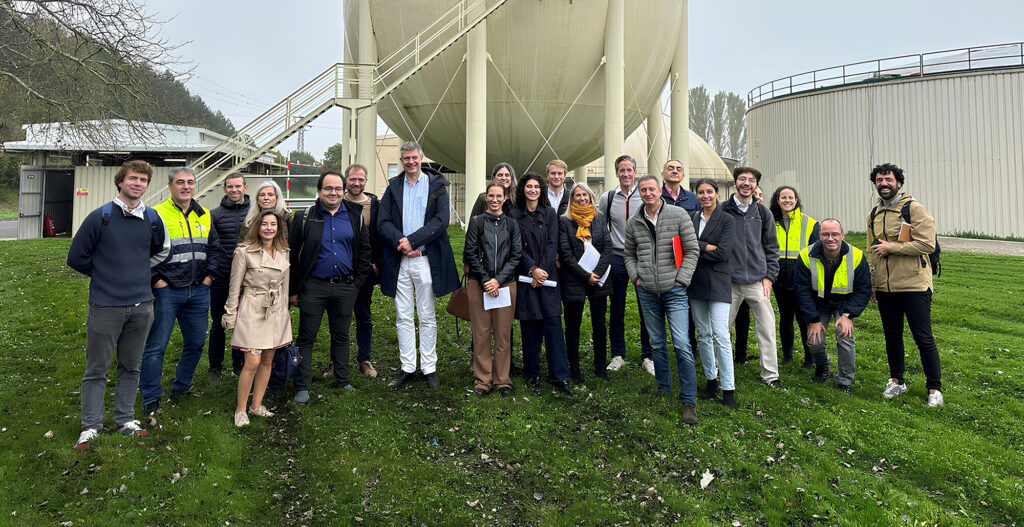
CARMA-H2 demonstrates bioPMR technology at the Arazuri wastewater treatment plant in Navarra, Spain. The pilot project will run two bioPMR units for at least 4,000 hours, generating 500 kg of hydrogen per day for energy and mobility applications, along with 4,000 kg of food-grade CO₂ daily, ready for reuse.
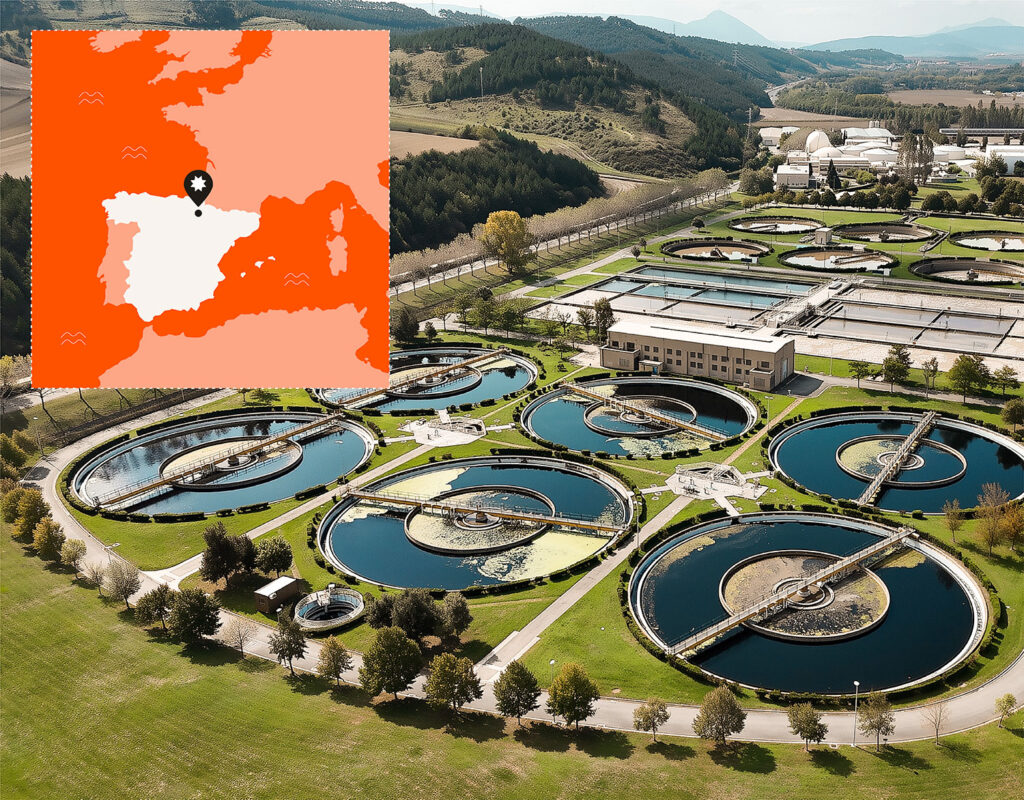
The system is organised into four key sub-systems:

-
 Biogas production
Organic waste from wastewater is transformed into biogas through anaerobic digestion.
-
 Biogas pre-treatment
The raw biogas is compressed and cleaned from unwanted impurities.
-
 bioPMR modules
The purified biogas is transformed into hydrogen and food-grade quality CO₂.
-
 CO₂ liquefaction
CO₂ is liquefied for storage or reuse, completing the net-zero cycle.
PROJECT GOALS
-
 Economic growth
CARMA-H2 drives market adoption of bioPMR with integrated CO₂ liquefaction, strengthening a competitive European value chain and accelerating industrial-scale deployment.
-
 Environmental impact
By optimising biogas utilisation, CARMA-H2 significantly cuts greenhouse gas emissions and enhances waste valorisation, supporting a circular economy.
-
 Scientific innovation
The project pioneers an electrochemical system that operates on raw biogas with minimal pre-treatment, reducing costs and simplifying hydrogen production.
-
 Social benefits
CARMA-H2 fosters job creation across the renewable energy value chain, boosting the hydrogen economy and supporting sustainable development.